
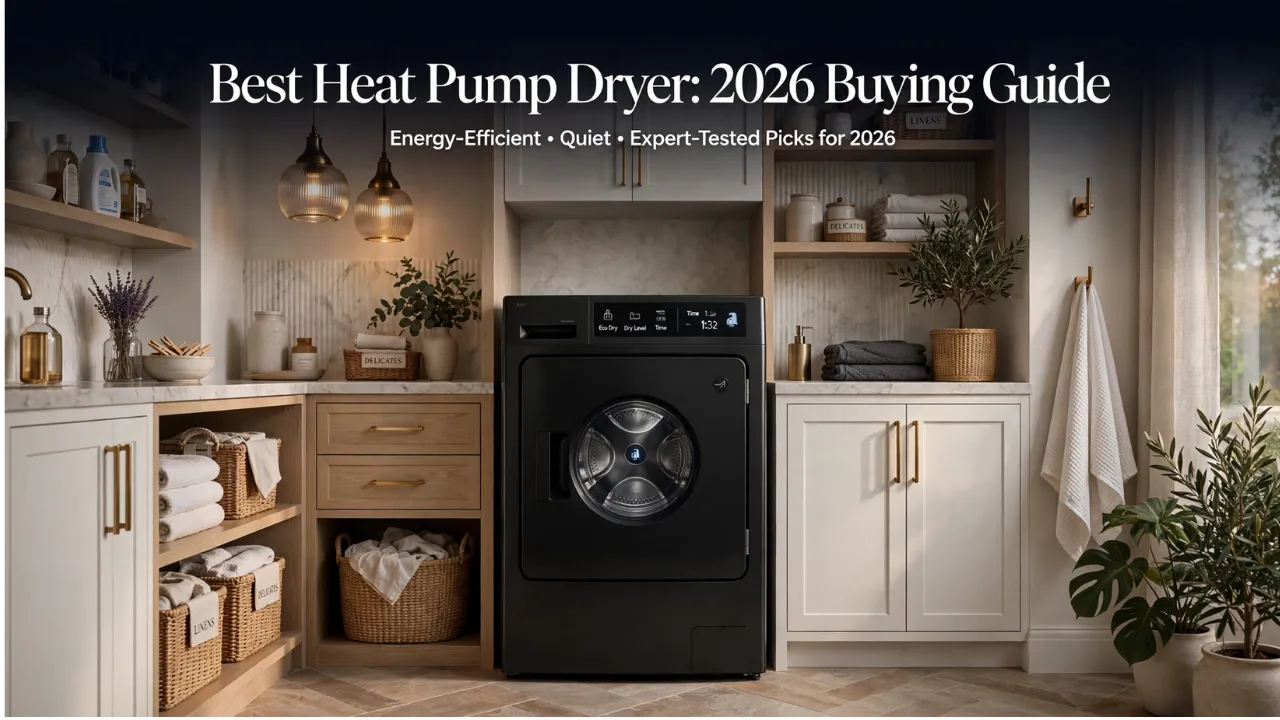
A top best heat pump dryer will make laundry easier, lower cost over time, and more efficient. Heat pump dryers recycle warm air used for drying instead of continuously creating and exhausting warm air by using lower drying temperatures.
If you’re after an energy efficient dryer for the home, check out a heat pump dryer. This is particularly useful for families that do several loads every week.
Unlike traditional vented dryers, heat pump dryers operate without an external exhaust vent. This makes them a practical choice for apartments, condos, and homes where it is challenging to install a dryer vent.

Our Guide to Heat Pump DryersIn this guide, we will explain how heat pump dryers work, what features you should look for, the advantages and disadvantages of them as well as
What Is a Heat Pump Dryer?
A heat pump dryer is an energy-efficient clothes dryer that uses a heat pump system to dry clothes.
Instead of creating heat and sending hot, moist air outside, the dryer recirculates the air inside the machine. The moisture is removed from the air, and the warm air is reused.
This process allows a heat pump dryer to operate at lower temperatures than many conventional dryers.
The lower temperature can be gentler on fabrics. It can also reduce energy consumption, making the best heat pump dryer an attractive option for people who want to save energy.
How Does a Heat Pump Dryer Work?
A heat pump dryer works through a continuous air circulation process.
First, the dryer warms the air. The warm air passes through the clothes and absorbs moisture.
The moisture-filled air then travels through the heat pump system. Moisture is condensed and collected in a water container or directed to a drain, depending on the model.
The dryer then reheats the air and sends it back through the drum.
Because the air is reused, the machine does not need to constantly generate new hot air. This is one of the main reasons a heat pump dryer can be more energy efficient.
Why Choose the Best Heat Pump Dryer?
The biggest reason to choose the best heat pump dryer is energy efficiency.
Traditional dryers can consume significant amounts of electricity because they use high temperatures and continuously heat incoming air.
A heat pump dryer recycles warm air. This can significantly reduce the amount of energy needed for drying.
Another advantage is fabric care.
Because heat pump dryers generally operate at lower temperatures, they can be gentler on clothes. This is helpful when drying delicate fabrics, everyday clothing, towels, and other laundry items.
Heat pump dryers are also flexible when it comes to installation.
Since they do not require an external vent, they can work well in many locations where traditional vented dryers are inconvenient.
Best Heat Pump Dryer Features to Look For
Choosing the best heat pump dryer requires more than looking at the price. Several features can make a major difference in everyday use.
1. Large Drum Capacity
Capacity is important if you regularly wash large loads.
A larger dryer can handle more clothing at once, reducing the number of drying cycles you need.
For families, a dryer with a capacity of around 7 to 9 cubic feet can be a useful range to consider.
Smaller households may prefer a compact heat pump dryer that takes up less space.
2. Moisture Sensors
Moisture sensors are one of the most useful features in a modern dryer.
The sensors detect how much moisture remains in the clothes and automatically adjust the drying cycle.
This can prevent unnecessary drying.
A good moisture-sensing system can help protect clothes from excessive heat while also reducing energy waste.
If you are comparing models to find the best heat pump dryer, moisture sensing should be high on your list.
3. Multiple Drying Programs
Different fabrics require different drying conditions.
Look for a dryer with programs for cotton, synthetics, delicate clothing, towels, bedding, and quick drying.
Specialized programs make it easier to dry different types of laundry safely.
Some premium models also offer anti-crease and refresh cycles.
4. Easy-to-Clean Filters
A dryer collects lint and other particles during operation.
A removable and easy-to-clean filter makes maintenance much easier.
Some heat pump dryers have multiple filters because the heat pump system needs to remain clean for efficient operation.
Before purchasing, check how easy the filters are to remove and clean.
5. Water Collection or Drain Option
Heat pump dryers remove moisture from clothing and collect it as water.
Some models have a removable water tank.
Others can connect directly to a drain.
A direct-drain option can be convenient because you don’t need to empty the water container after every few loads.
6. Quiet Operation
If your laundry area is close to a bedroom, living room, or office, noise level matters.
Look for a heat pump dryer designed for quiet operation.
A quieter machine can make laundry less disruptive, particularly in apartments and smaller homes.
7. Smart Features
Some modern dryers include Wi-Fi connectivity and smartphone controls.
Smart features may allow you to monitor cycles, receive notifications, and control certain settings remotely.
These features are convenient, but they should not be the main reason to buy a dryer.
Performance, efficiency, capacity, reliability, and maintenance should come first.
Best Heat Pump Dryer for Small Spaces
A heat pump dryer can be an excellent option for small homes and apartments.
Because it doesn’t require a traditional external exhaust vent, installation can be more flexible.
However, you should still check the manufacturer’s installation requirements.
Measure the available space before purchasing.
Pay attention to width, depth, and height. Also check whether the door can open comfortably in your laundry area.
For very small spaces, a compact heat pump dryer may be preferable to a full-size model.

Best Heat Pump Dryer for Families
Large families usually need a dryer with a bigger drum.
A high-capacity model can reduce the number of cycles needed each week.
Look for a large drum, strong moisture sensing, multiple programs, and an efficient drying system.
A family-oriented best heat pump dryer should also have simple controls.
If several people use the appliance, an easy-to-understand control panel can make laundry much easier.

Heat Pump Dryer vs. Vented Dryer
The main difference is how the two machines handle hot air.
A vented dryer heats air and sends moist air outside through an exhaust vent.
A heat pump dryer recirculates air and removes moisture using its heat pump system.
Heat pump dryers generally use less energy, but their cycles can take longer.
Vented dryers may have faster drying cycles, but they can consume more electricity.
If your priority is energy efficiency, a heat pump dryer can be the better choice.
If fast drying is your highest priority, a conventional vented dryer may still be attractive.
Heat Pump Dryer vs. Condenser Dryer
Heat pump dryers and condenser dryers are similar because neither typically requires a traditional external exhaust vent.
However, heat pump models use a heat pump system to recycle heat.
Standard condenser dryers generally use heating elements to produce heat.
The result is that heat pump dryers are usually more energy efficient.
They may also operate at lower temperatures, which can be beneficial for fabric care.
The trade-off is that a heat pump dryer can have a higher purchase price and longer cycle times.
Also read:Best Ventless Dryer for Apartments: 2026 Buying Guide
Advantages of a Heat Pump Dryer
There are several reasons homeowners choose a heat pump dryer.
Energy Efficiency
Lower energy consumption is one of the biggest benefits.
The recycled-air system allows the dryer to use energy more efficiently.
Gentler Drying
Lower drying temperatures can help reduce stress on fabrics.
This is useful for clothing that may be sensitive to high temperatures.
No Traditional Exhaust Vent
A heat pump dryer does not need a conventional external dryer vent.
This provides more installation flexibility.
Lower Operating Costs
Although the initial purchase price can be higher, reduced energy use may help lower operating costs over the life of the appliance.
Flexible Installation
Heat pump dryers can be suitable for many homes and apartments where traditional venting is difficult.
Disadvantages of Heat Pump Dryers
The best heat pump dryer still has some disadvantages.
Higher Initial Price
Heat pump dryers often cost more than basic conventional dryers.
The higher upfront cost can be a concern for budget-conscious buyers.
Longer Drying Times
Heat pump dryers generally use lower temperatures.
As a result, some cycles may take longer than those of conventional dryers.
More Maintenance
Filters and heat pump components need regular cleaning.
Following the manufacturer’s maintenance instructions is important for maintaining efficiency.
Water Tank Management
If your model does not connect directly to a drain, you may need to empty the condensation water tank regularly.
How to Choose the Best Heat Pump Dryer
Start by considering your household size.
A single person or couple may not need a very large dryer.
A large family should consider a larger capacity.
Next, consider your available space.
Measure the laundry area carefully and compare those measurements with the manufacturer’s dimensions.
Energy efficiency should also be a major consideration.
Look for an efficient model with moisture sensors and automatic drying controls.
Think about your laundry habits as well.
If you frequently dry towels and bedding, capacity is important. If you mostly dry shirts and delicate clothing, fabric-care programs may matter more.
Finally, consider maintenance.
The best heat pump dryer should be relatively easy to clean and maintain.
How Much Does a Heat Pump Dryer Cost?
Heat pump dryer prices vary significantly depending on capacity, brand, features, and efficiency.
Basic models can be relatively affordable, while premium models may include smart controls, advanced sensors, larger drums, and specialized drying programs.
Instead of choosing solely based on purchase price, consider the total cost of ownership.
A more efficient dryer may cost more initially but use less electricity over many years.
This is particularly important if you do several laundry loads every week.
How to Maintain a Heat Pump Dryer
Regular maintenance can help keep your dryer working efficiently.
Clean the lint filter after recommended cycles or according to the manufacturer’s instructions.
If your dryer has a condenser or heat exchanger that requires cleaning, follow the manufacturer’s instructions carefully.
Empty the water tank when necessary if your machine does not use a drain connection.
Keep the area around the dryer clean and make sure the appliance has the required ventilation clearance.
Never ignore warning messages or unusual sounds.
Proper maintenance can help extend the useful life of your heat pump dryer.
Is a Heat Pump Dryer Worth It?
For many households, a heat pump dryer is worth considering.
It can provide excellent energy efficiency, flexible installation, and gentler drying.
The biggest downside is usually the higher upfront cost and potentially longer drying cycles.
If you use your dryer frequently, energy savings can become more valuable over time.
For occasional users, a less expensive conventional dryer may make more financial sense.
Your laundry habits should ultimately determine whether the best heat pump dryer is right for you.
Final Verdict
The best heat pump dryer can be an excellent investment for households that want efficient drying, flexible installation, and better fabric care.
When comparing models, focus on capacity, moisture sensors, drying programs, energy efficiency, maintenance requirements, noise level, and installation options.
Don’t choose a dryer simply because it has the lowest price.
A reliable and efficient heat pump dryer can save energy and provide convenient drying for years.
For apartments, families, and frequent laundry users, investing in the right best heat pump dryer can make the entire laundry routine easier.
Before buying, compare the specifications, warranty, customer feedback, installation requirements, and long-term operating costs.
Frequently Asked Questions
Are heat pump dryers better than regular dryers?
Heat pump dryers can be better when energy efficiency and fabric care are priorities.
They generally use lower temperatures and recycle warm air.
However, traditional dryers may offer faster drying cycles and lower purchase prices.
Do heat pump dryers take longer to dry?
Yes, heat pump dryers can take longer because they generally operate at lower temperatures.
The trade-off is improved energy efficiency and potentially gentler treatment of clothing.
Do heat pump dryers need a vent?
No traditional external exhaust vent is normally required.
This is one of the main advantages of a heat pump dryer, especially for apartments and homes without convenient dryer venting.
Do heat pump dryers use less electricity?
Generally, yes.
The heat pump system recycles warm air instead of continuously producing new heated air, allowing the appliance to use energy more efficiently.
Can you put a heat pump dryer anywhere?
Not necessarily.
Although venting is more flexible, the dryer still requires proper electrical service, clearance, airflow, and installation conditions.
Always follow the manufacturer’s installation requirements.
Are heat pump dryers good for clothes?
Yes.
The lower operating temperatures can be gentler on many fabrics compared with high-temperature drying.
However, you should always follow the care labels on your clothing.


1 Comment
[…] Also read:Best Heat Pump Dryer: 2026 Buying Guide […]