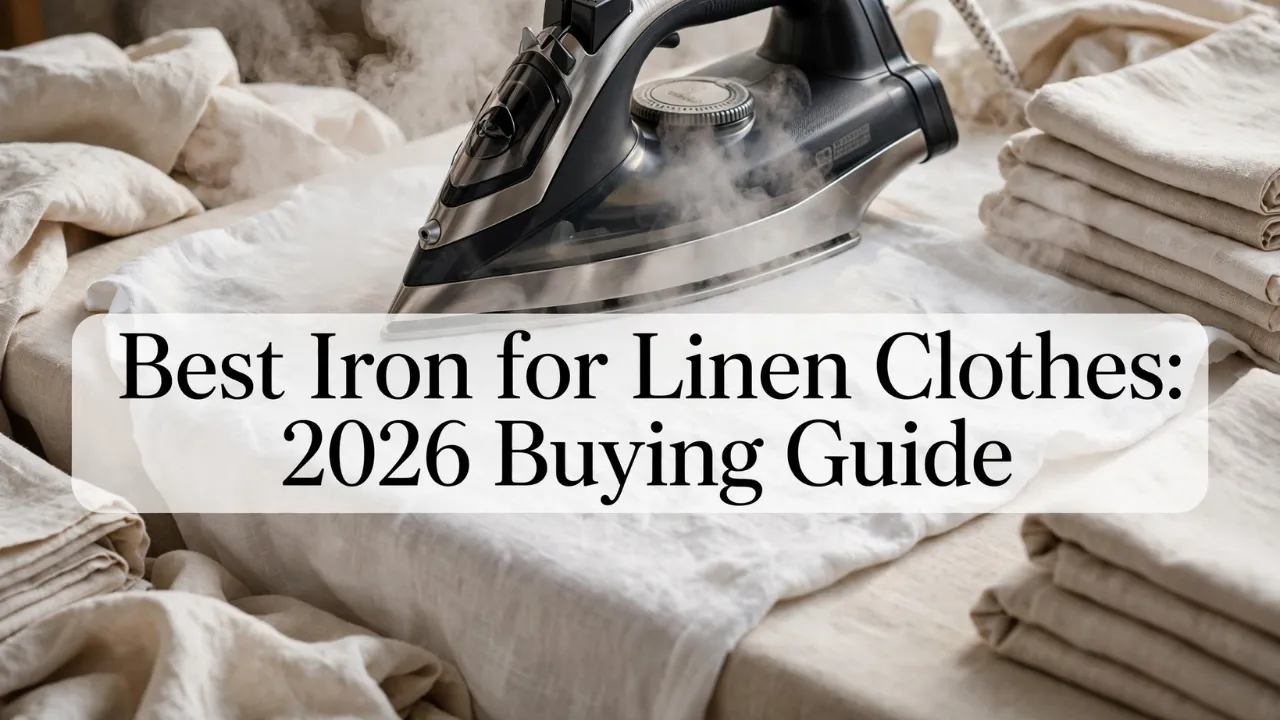
True to its nature, Best Iron for Linen Clothes, linen clothing is cool and comfortable, breezy and stylish — every bit a perfect match for warm weather. On the other hand, linen material is also known to gain irritating creases. While a regular iron will work for removing light creases, opting for the best iron for linen clothing can speed up things and make ironing simpler and more effective.
With linen, you want enough heat and steam to relax deep wrinkles without burnishing the fabric. This is why often times a very strong steam iron with variable temperature settings changes the game more than just an ordinary dry iron.
With this guide, we will explain how to buy an iron when you are going for linen clothes. From steam power to soleplate quality, temperature control and water tanks safety features and more.

The best iron for linen clothes is usually a powerful steam iron with adjustable temperature settings, continuous steam output, and a smooth-gliding soleplate.
Linen responds particularly well to steam. Moisture helps relax the natural fibers, making deep wrinkles easier to remove.
What Is the Best Iron for Linen Clothes?
The best iron for linen clothes is usually a high-quality steam iron that provides strong, consistent steam and precise temperature control.
Linen often needs more heat and moisture than delicate synthetic fabrics. A powerful steam iron can penetrate the fibers and loosen stubborn wrinkles more effectively.
Look for an iron with a stainless-steel or ceramic soleplate. The soleplate should glide smoothly across linen without sticking or creating unnecessary friction.
A powerful steam burst is also useful. It can help remove deep creases from linen shirts, trousers, dresses, curtains, and table linens.
Automatic temperature control can be helpful for people who iron different fabrics. However, manual temperature settings are useful when you want more control over linen.
Why Is Linen Difficult to Iron?
Linen is made from flax fibers, which give the fabric its distinctive texture and breathability. These natural fibers also make linen particularly prone to wrinkles.
A regular iron can remove light wrinkles, but stubborn creases may require more steam and heat.
Dry ironing linen can take longer because moisture helps relax the fabric fibers. This is why a steam iron for linen clothes is often a better option than a basic dry iron.
The good news is that linen responds very well to proper steam and heat. With the right iron, you can achieve professional-looking results at home.
Key Features to Look for in an Iron for Linen
Choosing the right iron is easier when you know which features actually matter.
1. Powerful Steam Output
Steam is one of the most important features when choosing the best iron for linen clothes.
Strong continuous steam helps soften linen fibers while you move the iron across the fabric.
A powerful steam burst is particularly useful for stubborn wrinkles. It allows you to concentrate extra steam on heavily creased areas.
For frequent linen ironing, prioritize an iron with strong continuous steam and a dedicated steam burst function.
2. Adjustable Temperature Control
Temperature control is another important feature.
Linen generally requires relatively high ironing temperatures, but you should always follow the care label on the garment.
An iron with multiple temperature settings gives you more flexibility. You can use a higher setting for linen and a lower setting for polyester, silk, or other sensitive materials.
Precise controls are especially useful if your laundry includes several different fabric types.
3. Smooth Soleplate
The soleplate is the part of the iron that comes into direct contact with your clothing.
A smooth soleplate should glide easily across linen without pulling or catching the fibers.
Ceramic soleplates are popular because they generally provide smooth movement. Stainless-steel soleplates are also widely used and can offer excellent durability and glide.
Whatever material you choose, look for a soleplate designed for easy movement and even heat distribution.
4. Large Water Tank
A larger water tank can be useful if you regularly iron linen clothes.
Linen often benefits from generous steam, so you may use more water than you would when dry ironing.
A larger tank means fewer interruptions to refill the iron.
For people who iron several shirts, dresses, trousers, or household linen items at once, a larger water reservoir can save time.
5. Vertical Steam
Vertical steaming can be a useful extra feature.
It allows you to release steam while holding a garment vertically. This can be convenient for linen dresses, jackets, curtains, and hanging shirts.
However, vertical steam should be considered an additional feature rather than the main reason to purchase an iron.
For serious linen ironing, strong horizontal steam performance remains more important.
6. Anti-Drip Protection
Water droplets can leave marks on clothing, especially when you use the iron at lower temperatures.
Anti-drip technology helps prevent excess water from leaking through the soleplate.
This feature can be useful when you switch between different fabrics.
7. Auto Shut-Off
Safety is another consideration when choosing the best iron for linen clothes.
Auto shut-off can turn the iron off after it has remained inactive for a certain period.
This feature is particularly useful if you frequently get distracted while doing laundry.
Best Type of Iron for Linen
There are several types of irons available, but they are not equally suitable for linen.
Steam Iron
A traditional steam iron is usually the best all-around option for linen clothing.
It combines heat and moisture to loosen wrinkles efficiently.
A good steam iron is suitable for linen shirts, pants, dresses, bedding, tablecloths, and other household fabrics.
For most households, this is the type of iron we recommend.

Steam Generator Iron
A steam generator iron is designed for people who do a large amount of ironing.
It has a separate water tank that can produce large amounts of steam.
This makes steam generator irons particularly effective for heavily wrinkled linen and large laundry loads.
The downside is that they are generally larger and more expensive than standard steam irons.

Dry Iron
A dry iron can technically be used on linen, but it may require more effort.
Without steam, stubborn wrinkles can take longer to remove.
If you regularly wear linen, a steam iron is generally a more convenient choice.

Also read:Best Iron for Heavy Clothes: 2026 Buying Guide
Best Iron for Linen Shirts
Linen shirts are among the most common garments that require ironing.
The best iron for linen shirts should have strong steam, a smooth soleplate, and accurate temperature control.
Start with the shirt slightly damp if possible. Alternatively, use the steam function on your iron.
Iron the collar first. Then move to the cuffs and sleeves before working on the front and back sections.
Avoid leaving the iron stationary on one area for too long.
Move the iron steadily across the fabric while allowing the steam to relax the wrinkles.
Best Iron for Linen Pants
Linen pants can develop deep wrinkles around the knees, waistband, and legs.
A powerful steam burst can help tackle these areas.
Place the pants flat on a suitable ironing board. Work in sections rather than attempting to iron the entire garment at once.
For sharp creases, follow the garment’s care instructions and use controlled pressure.
Always check the manufacturer’s recommended temperature before ironing.
Best Iron for Linen Dresses
Linen dresses can be challenging because they have larger surface areas and different shapes.
An iron with a long-lasting steam supply can make the process easier.
Hang the dress or place it carefully on an ironing board depending on the garment design.
Use steam to relax wrinkles and work from larger sections toward smaller areas.
Be careful around decorative elements, buttons, embroidery, and seams.
How to Iron Linen Clothes Properly
Using the best iron for linen clothes is only part of the process. Proper technique is equally important.
Step 1: Check the Care Label
Always begin by checking the garment’s care label.
The label provides important information about the maximum ironing temperature and whether steam ironing is permitted.
Step 2: Prepare the Iron
Fill the water tank if you plan to use steam.
Set the temperature according to the manufacturer’s instructions for the linen garment.
Allow the iron to reach the required temperature before starting.
Step 3: Slightly Dampen the Linen
Linen often responds well to moisture.
If the garment is completely dry, you can use the iron’s steam function or lightly mist the fabric if the care instructions allow it.
Avoid soaking the garment.
Step 4: Iron in Sections
Work systematically.
Start with smaller areas such as collars and cuffs before moving to larger sections.
Use smooth, controlled movements instead of repeatedly pressing the iron in the same spot.
Step 5: Hang the Garment
After ironing, hang the linen garment immediately.
Allowing the fabric to cool while hanging can help maintain a smoother appearance.
Should You Iron Linen Wet or Dry?
Linen can generally be easier to iron when it is slightly damp rather than completely dry.
Moisture helps relax the fibers, allowing wrinkles to disappear more easily.
However, the fabric should not be soaking wet.
A good steam iron can provide enough moisture without requiring you to wet the entire garment.
If your iron produces strong steam, you can often iron dry linen effectively by using the steam function.
Can You Use a Steam Iron on Linen?
Yes, a steam iron is generally an excellent choice for linen.
Steam can penetrate the fabric and relax its fibers, making stubborn wrinkles easier to remove.
However, always check the care label before ironing.
Use the appropriate temperature and avoid excessive pressure.
A combination of heat, steam, and smooth movement usually produces the best results.
Can High Heat Damage Linen?
Linen can tolerate relatively high ironing temperatures compared with many synthetic fabrics, but excessive heat can still cause problems.
The safest approach is to follow the garment’s care instructions.
Never assume that every linen item can be ironed at the same temperature.
Blended fabrics may require different settings from 100% linen.
If you are uncertain, start with a lower temperature and increase it gradually if necessary.
Steam Iron vs. Garment Steamer for Linen
Both steam irons and garment steamers can remove wrinkles, but they work differently.
A steam iron combines heat, steam, and pressure. This makes it better for creating crisp finishes and removing deep wrinkles.
A garment steamer is more convenient for quick touch-ups and hanging garments.
If your primary goal is to create sharply pressed linen shirts and trousers, a steam iron for linen clothes is usually the better choice.
If you mainly want quick wrinkle removal before leaving home, a garment steamer may be more convenient.
How Much Should You Spend on an Iron for Linen?
You do not necessarily need the most expensive iron to get good results.
Budget steam irons can work well for occasional linen ironing.
Mid-range models often provide better steam performance, larger water tanks, improved soleplates, and more convenient controls.
Premium irons may offer advanced temperature systems, powerful steam, improved glide, and additional safety features.
For most households, a reliable mid-range steam iron offers a good balance between performance and price.
Common Mistakes When Ironing Linen
Avoiding common mistakes can help protect your clothes.
Using Too Much Heat
More heat does not always mean better results.
Always follow the care label.
Ironing Completely Dry Linen
Very dry linen can be more difficult to press.
Using steam can make the process considerably easier.
Holding the Iron in One Place
Leaving a hot iron stationary can damage fabric.
Keep the iron moving steadily.
Ignoring the Soleplate
A dirty soleplate can transfer residue onto clothing.
Clean the soleplate according to the manufacturer’s instructions.
Overfilling the Water Tank
Do not exceed the maximum water level.
Overfilling can cause leaks and reduce convenience.
Maintenance Tips for Your Iron
Regular maintenance can help your iron perform better.
Empty the water tank after use if recommended by the manufacturer.
Clean the soleplate when necessary.
If your iron has an anti-scale or self-cleaning function, use it according to the manufacturer’s instructions.
Using suitable water can also help reduce mineral buildup, depending on the manufacturer’s recommendations.
Proper maintenance can extend the life of your iron and help maintain consistent steam performance.
What Is the Best Iron for Linen Clothes in 2026?
The best iron for linen clothes in 2026 is one that combines strong steam performance, accurate temperature control, a smooth soleplate, a useful water tank, and reliable safety features.
There is no single iron that is perfect for every household.
For occasional ironing, a standard steam iron is usually enough.
For large families or people who regularly iron linen bedding and clothing, a high-performance steam generator iron may be worth considering.
For travelers, a compact steam iron can provide convenience without taking up much space.
The right choice depends on how often you iron and the type of linen garments you own.
Final Buying Checklist
Before purchasing the best iron for linen clothes, consider these features:
- Strong continuous steam
- Powerful steam burst
- Adjustable temperature settings
- Smooth ceramic or stainless-steel soleplate
- Large or practical water tank
- Anti-drip protection
- Anti-scale features
- Auto shut-off
- Comfortable handle
- Good cord length
- Easy-to-use controls
- Reliable construction
Prioritize the features that match your laundry routine.
You do not need every premium feature if you only iron a few linen shirts each week.
Final Verdict
The best iron for linen clothes should make wrinkle removal fast, smooth, and consistent.
For most people, a powerful steam iron for linen clothes is the best option. Strong steam helps relax linen fibers, while a smooth soleplate makes it easier to glide across the fabric.
Temperature control is equally important. Linen garments can vary in construction, so always follow the manufacturer’s care instructions.
If you regularly iron large amounts of linen, consider a steam generator iron with a larger water tank and stronger steam output.
If you only need occasional touch-ups, a standard steam iron can provide excellent results at a lower price.
Ultimately, the best iron for linen is the one that provides the right combination of steam, heat control, smooth movement, safety, and convenience for your laundry needs.


1 Comment
[…] Also read:Best Iron for Linen Clothes: 2026 Buying Guide […]