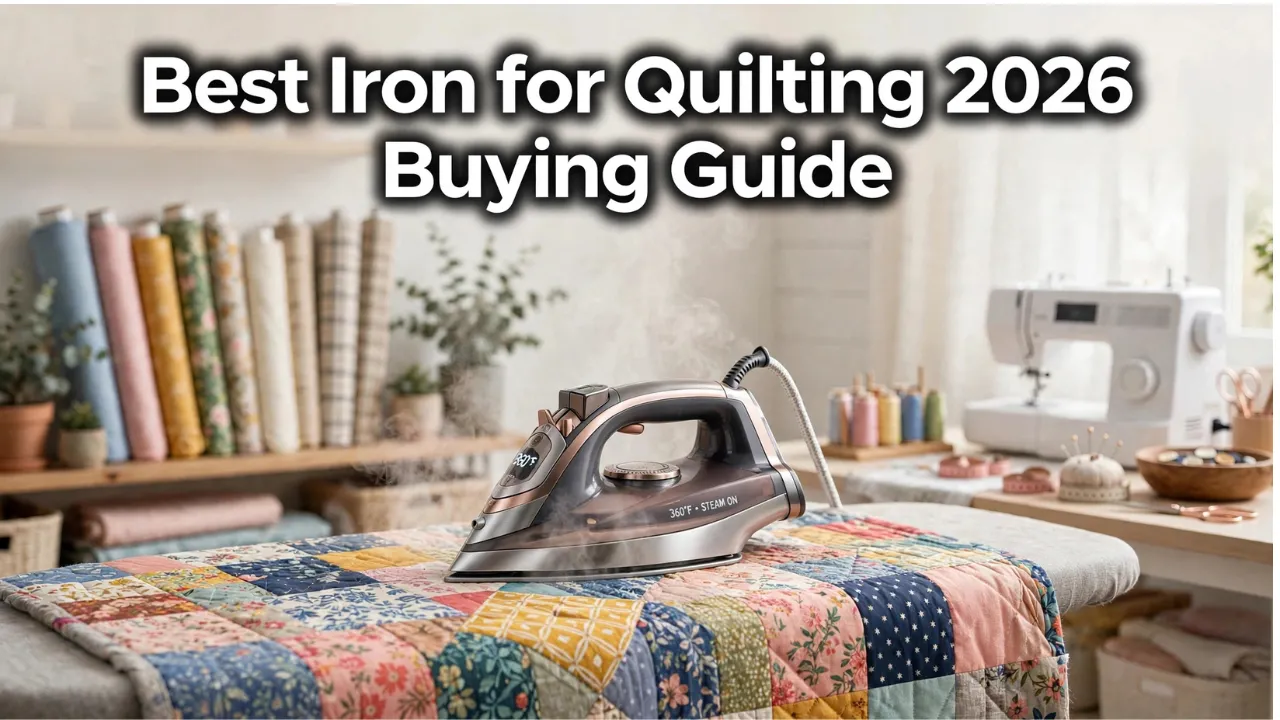
Its a very precise craft and takes time, again, patience is key here together with the right tools. Best Iron for Quilting ,Of all the quilting tools, an iron is perhaps one of the most essential. A decent best iron for quilting is capable of granting you flat seams, sharp quilt blocks, crisp edges, and finishes that look like a professional just put them together.
Quilting differs to that of regular ironing in the sense that many small pieces of fabric, seam allowance, appliqué, patchwork and large quilt sections are pressed. That means your iron should be able to control temperature, glide around smoothly and produce enough heat to get the job done on cotton fabrics.

In this Best Iron for Quilting 2026 buying guide, we examine some of the most useful irons (and some features that quilters will find important) and choose which model will work best in your sewing room.
Quick Comparison: Best Iron for Quilting 2026
| Iron | Best For | Main Advantage |
|---|---|---|
| Oliso TG1600 Pro+ | Overall quilting | Auto-lift and strong heat |
| Rowenta DW9280 SteamForce | Precision pressing | Powerful steam and pointed tip |
| Panasonic NI-WL600 | Cordless quilting | Easy movement |
| PurSteam SteamBurst+ | Budget buyers | Ceramic soleplate and steam |
| Oliso M2 Mini Project Iron | Small projects | Compact precision |
The right best iron for quilting depends on your quilting style. A full-size iron is excellent for large quilt tops, while a mini iron is useful for tiny seams, appliqué, and foundation paper piecing.
1. Oliso TG1600 Pro+ – Best Overall Iron for Quilting
The Oliso TG1600 Pro+ is one of the strongest choices for quilters who want an ergonomic and powerful iron.
Its iTouch technology automatically lifts the iron when you release the handle and lowers it when you touch the handle. This can make repeated pressing more convenient during long quilting sessions.
The iron also provides strong heat and a precision tip. That combination is useful when pressing seam allowances, corners, and detailed quilt blocks.
For quilters who spend several hours sewing and pressing, the automatic lifting feature can reduce the need to repeatedly stand the iron upright.
Current 2026 quilting guides frequently place the Oliso TG1600 Pro+ among the leading options for quilting because of its combination of power, safety, and ergonomic design.

Why Choose It?
- Strong 1,800W heating
- iTouch automatic lift technology
- Precision tip
- Useful for cotton and quilting fabrics
- Helpful for long sewing sessions
- Automatic shut-off protection
If you want one premium best iron for quilting for regular sewing-room use, this is an excellent place to start.
2. Rowenta DW9280 SteamForce – Best for Precision
The Rowenta DW9280 SteamForce is another excellent option for quilters who want strong steam and precise pressing.
A pointed tip is particularly helpful in quilting. It can reach narrow areas around seams and corners that are difficult to press with a wide soleplate.
The DW9280 is designed for strong steam performance and has a stainless-steel soleplate. This makes it suitable for quilters who regularly work with cotton fabric and larger pieces.
A 2026 quilting guide from The Hobby Guru lists the Rowenta DW9280 as a strong overall choice because of its steam performance, tip control, and sturdy construction.

Why Choose It?
- Powerful steam
- Stainless-steel soleplate
- Precision tip
- Suitable for frequent pressing
- Good choice for larger quilt projects
If your priority is detailed pressing and strong steam, the Rowenta can be a practical best iron for quilting choice.
3. Panasonic NI-WL600 – Best Cordless Iron for Quilting
Cordless irons can make quilting more comfortable because there is no power cord dragging across the fabric.
The Panasonic NI-WL600 uses a double-pointed soleplate that allows movement in multiple directions. This can be useful when working around quilt blocks or large pieces.
Cordless operation is especially convenient when your pressing station is small or when you do not want the cord catching on your quilt.
The Panasonic model is repeatedly recommended in 2026 quilting guides as a cordless option for quilters who want freedom of movement.

Why Choose It?
- Cordless operation
- Double-pointed soleplate
- Easy movement
- Useful for large pieces
- Convenient for sewing rooms and retreats
For anyone who dislikes cords, the Panasonic NI-WL600 deserves consideration when searching for the best iron for quilting.
4. PurSteam SteamBurst+ – Best Budget-Friendly Option
Not every quilter wants to spend a large amount on an iron. The PurSteam SteamBurst+ can be considered by budget-conscious users who still want useful quilting features.
It has a ceramic soleplate, steam functionality, self-cleaning features, and adjustable heat settings.
A current 2026 comparison of irons for quilting lists the PurSteam SteamBurst+ among its leading options.
Ceramic soleplates can provide smooth movement across fabric. This is particularly useful when you are pressing many seams during a long quilting project.

Why Choose It?
- Ceramic soleplate
- Steam function
- Self-cleaning system
- Adjustable heat
- Budget-friendly design
If you are looking for an affordable best iron for quilting, this type of iron can provide a good balance between features and price.
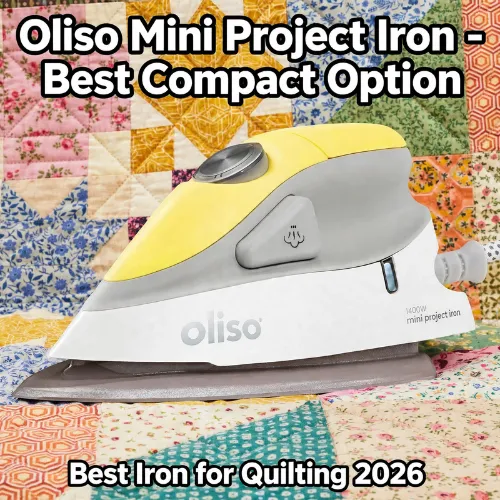
5. Oliso M2 Mini Project Iron – Best Mini Iron for Quilting
A mini iron is different from a traditional full-size iron.
It is designed for small areas, tight corners, appliqué, small blocks, and detailed sewing work.
The Oliso M2 Mini Project Iron is a popular choice for quilters who need precision without using a large household iron.
Mini irons can be particularly useful for foundation paper piecing, appliqué, small seam allowances, and quilting retreats.
Current 2026 mini-iron guides highlight the Oliso M2 for its compact design, ceramic soleplate, precision tip, and quilting-friendly ergonomics.
Why Choose It?
- Compact size
- Precision tip
- Ceramic soleplate
- Easy to store
- Useful for detailed quilting
- Convenient for travel and retreats
However, a mini iron should not necessarily replace a full-size iron. For large quilt tops, a standard iron provides more surface area and can make pressing faster.
Also read:Best Washing Machine for Stains: 2026 Buying Guide
Why Do Quilters Need a Good Iron?
Pressing is an important part of quilting.
After sewing two pieces of fabric together, pressing the seam helps flatten and shape the fabric. Proper pressing can also help quilt blocks fit together accurately.
A poor-quality iron may create uneven heat, drag across fabric, leak water, or make precise pressing more difficult.
A good best iron for quilting should provide controlled heat and smooth movement.
The goal is not simply to remove wrinkles. Quilters use an iron to shape seams and prepare blocks for accurate assembly.
What Makes the Best Iron for Quilting?
Several features can make a major difference when selecting the best iron for quilting.
1. Temperature Control
Temperature control is essential.
Different quilting fabrics can require different heat settings. Cotton generally tolerates higher heat than delicate synthetic fabrics.
An iron with adjustable temperature settings allows you to choose an appropriate level for the material you are working with.
Good temperature control can also help prevent accidental scorching.
2. Smooth Soleplate
The soleplate should glide smoothly over your fabric.
A rough or damaged soleplate can catch fabric and make pressing frustrating.
Ceramic and stainless-steel soleplates are both common options. The most important factor is smooth movement and consistent heat.
3. Precision Tip
A pointed tip is extremely useful for quilting.
It can reach narrow seam areas, corners, points, and small fabric sections.
If you regularly work with intricate quilt blocks, prioritize a pointed iron when choosing the best iron for quilting.
4. Steam Control
Steam can help relax fabric fibers and remove stubborn wrinkles.
However, some quilters prefer dry pressing, particularly when working with certain appliqué materials or fusibles.
Look for an iron that gives you control over steam rather than forcing you to use it constantly.
5. Auto Shut-Off
Safety is another important consideration.
An automatic shut-off feature can turn the iron off after a period of inactivity.
This is useful in a busy sewing room where you may become distracted by your sewing machine, cutting table, or other quilting tasks.
6. Weight
Weight is often overlooked.
A very light iron may require more pressure from your hand to flatten seams. A heavier iron can provide more pressing force without requiring as much downward pressure.
However, an excessively heavy iron may become uncomfortable during long sessions.
The ideal best iron for quilting should feel balanced and comfortable in your hand.
Full-Size Iron vs. Mini Iron for Quilting
Should you buy a full-size iron or a mini iron?
The answer depends on your projects.
Full-Size Iron
A full-size iron is better for:
- Large fabric pieces
- Quilt tops
- Long seams
- General sewing
- Cotton fabric
- Removing wrinkles
- Frequent pressing
The larger soleplate allows you to cover more fabric with each movement.
Mini Iron
A mini iron is better for:
- Small quilt blocks
- Appliqué
- Foundation paper piecing
- Small seams
- Tight corners
- Sewing classes
- Quilting retreats
A mini iron offers greater control in small spaces.
For many serious quilters, owning both can be useful. The full-size iron handles general pressing, while the mini iron handles detailed work.
Steam vs. Dry Ironing for Quilting
Steam is useful for many quilting tasks, but it is not always necessary.
For cotton fabric, steam can help relax fibers and flatten stubborn wrinkles.
Dry pressing can offer more control when working with fusible materials or delicate applications.
The best approach depends on your fabric and project.
If you prefer flexibility, choose a steam iron that also allows dry operation.
How to Use an Iron for Quilting
Using the best iron for quilting is only part of getting professional results. Your pressing technique matters too.
Step 1: Set the Correct Temperature
Select the temperature appropriate for your fabric.
Do not immediately use the highest setting.
Step 2: Press Rather Than Drag
Quilters often use the word “press” rather than “iron.”
Instead of aggressively moving the iron back and forth, place it over the seam and apply controlled pressure.
This can help prevent fabric distortion.
Step 3: Press Seams Carefully
After sewing a seam, press it according to your pattern instructions.
You may press seams open or toward one side depending on your project.
Step 4: Use the Tip for Detailed Areas
Use the pointed tip around corners and narrow areas.
This is where a precision best iron for quilting can make a noticeable difference.
Step 5: Let Fabric Cool
Allow the fabric to cool after pressing when possible.
This helps the fabric retain its pressed shape.
Best Iron for Quilting: Buying Guide
Before purchasing, ask yourself a few questions.
How Often Do You Quilt?
If you quilt every week, investing in a quality iron makes sense.
For occasional quilting, an affordable model may be enough.
Do You Work With Large Quilts?
Choose a full-size iron if you frequently press large quilt tops.
A larger soleplate can save time.
Do You Make Small Blocks?
If your projects involve tiny pieces, appliqué, or foundation paper piecing, a mini iron can be extremely useful.
Do You Prefer Cordless?
A cordless model can provide excellent freedom of movement.
The Panasonic NI-WL600 is one example frequently mentioned for this purpose in 2026 quilting recommendations.
Is Safety Important?
Look for automatic shut-off protection.
This feature can be especially valuable if you regularly move between your sewing machine and pressing station.
Common Mistakes When Buying a Quilting Iron
One common mistake is choosing an iron based only on wattage.
Higher wattage can mean faster heating, but it does not automatically mean better quilting performance.
Another mistake is buying a very small iron for large quilt projects.
Mini irons are excellent for precision, but they can make large pressing jobs slower.
Some buyers also ignore soleplate shape.
A pointed tip can be much more useful than a wide blunt nose when working on detailed quilt blocks.
Finally, do not overlook comfort.
If an iron feels uncomfortable after five minutes, it may become frustrating during a three-hour quilting session.
Best Iron for Quilting for Different Users
Best for Beginners
The PurSteam SteamBurst+ is worth considering for beginners who want useful features without immediately investing in a premium model.
Best for Serious Quilters
The Oliso TG1600 Pro+ is an excellent option for dedicated quilters who want strong performance and ergonomic features.
Best for Precision
The Rowenta DW9280 is a strong choice for quilters who value steam power and a pointed tip.
Best Cordless
The Panasonic NI-WL600 is a convenient option for people who want freedom from a traditional power cord.
Best Mini Iron
The Oliso M2 Mini Project Iron is well suited to small quilting projects and detailed pressing.
How to Maintain Your Quilting Iron
Even the best iron for quilting needs regular maintenance.
Keep the soleplate clean.
Adhesive residue from fusible products can build up over time.
If your iron begins dragging, inspect the soleplate for residue.
Clean the water tank according to the manufacturer’s instructions if you use steam.
Avoid using unsuitable water if the manufacturer recommends a specific water type.
Store the iron safely after it has cooled.
Regular maintenance can help preserve smooth movement and reliable heating.
Final Verdict: What Is the Best Iron for Quilting in 2026?
The best iron for quilting should provide accurate temperature control, smooth movement, reliable heat, and a comfortable design.
For serious quilters, the Oliso TG1600 Pro+ is one of the strongest overall choices because of its powerful heating, precision tip, and iTouch lifting system.
The Rowenta DW9280 is a strong alternative for precision pressing and steam performance.
If you prefer cordless operation, the Panasonic NI-WL600 is worth considering.
For smaller projects and detailed work, the Oliso M2 Mini Project Iron can be a valuable addition to your sewing room.
For budget-conscious buyers, the PurSteam SteamBurst+ offers a useful combination of ceramic soleplate and steam features.
Ultimately, the right best iron for quilting depends on your quilting style, workspace, fabric types, budget, and how frequently you press.
A good iron can make quilting more enjoyable and help you achieve flatter seams, sharper blocks, and cleaner finished quilts.


1 Comment
[…] Also read:Best Iron for Quilting 2026 Buying Guide […]