
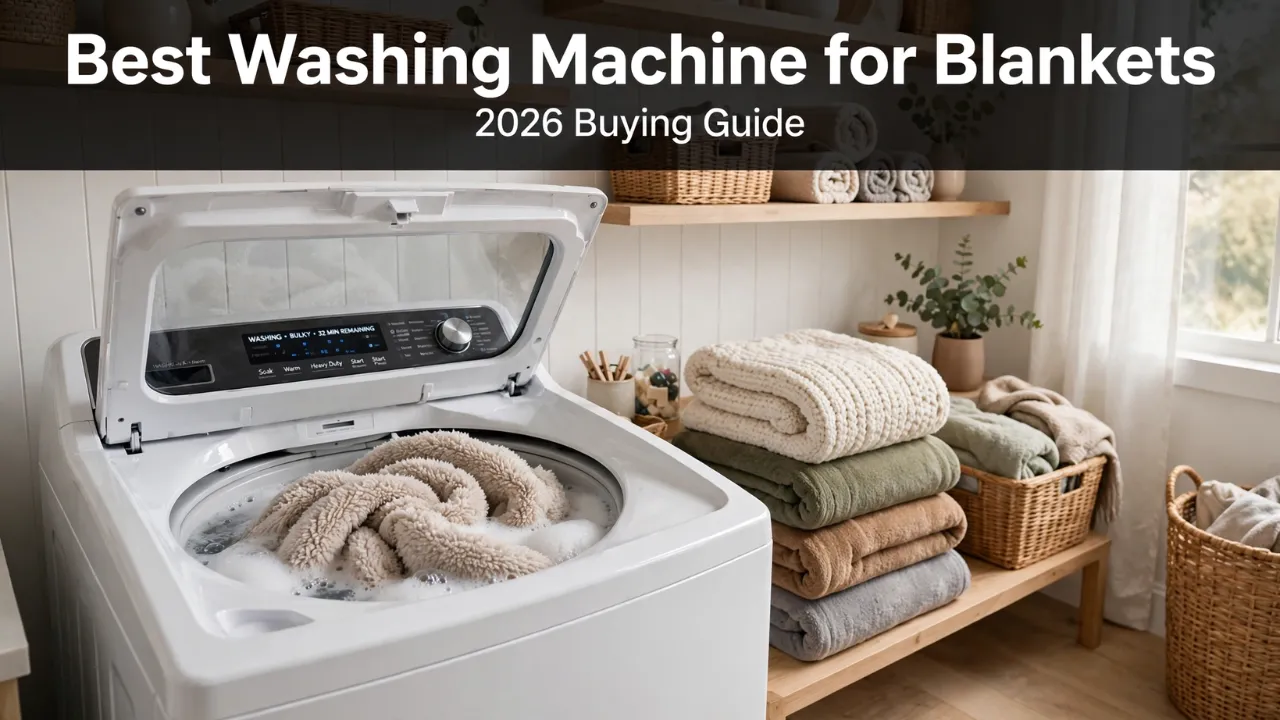
If your washing machine doesn’t have a large capacity, it can be quite challenging to wash blankets at home. Very absorbent blankets need plenty of room between them to be free, take the water in & rinse out. Having an appliance that is under sized can result in blankets coming out less than clean, and placing unnecessary stresses on the machine.
Selecting the ideal washing machine for blankets is based on various aspects including drum capability and wash patterns, spin speed, water consumption as well as general performance When it comes to heavy-duty blankets, comforters, quilts and bedding a washer of large capacity that has an open-type drum is the top option.

This guide will help you figure whether you really need to buy the best washing machine for blankets (definitely), what features matter and how to wash blankets safely at home.
What Is the Best Washing Machine for Blankets?
The best washing machine for blankets is generally a large-capacity front-load or top-load washer with enough drum space for bulky bedding.
For most households, a washer with around 4.5 to 5.5 cubic feet of capacity provides useful space for large blankets and comforters. Larger households may benefit from machines offering even more capacity.
A spacious drum allows the blanket to move through the water instead of being tightly packed inside the washer.
Front-load washers are particularly useful for bulky items because they provide a large horizontal drum and strong tumbling action. High-capacity top-load washers can also perform well, especially models without a traditional center agitator.
Why Capacity Matters for Washing Blankets
Capacity is one of the most important features when shopping for the best washing machine for blankets.
A blanket can take up much more space than ordinary clothing. When a blanket is stuffed into a small drum, water and detergent may not circulate properly.
This can result in dirty areas, detergent residue, and poor rinsing.
A larger washing machine gives bulky blankets enough room to move. This improves cleaning performance and can also reduce excessive strain on the washer.
Recommended Washer Capacity
Here is a general guide:
| Washer Capacity | Suitable For |
|---|---|
| Under 4.0 cu. ft. | Small blankets and everyday laundry |
| 4.0–4.5 cu. ft. | Twin and some full-size blankets |
| 4.5–5.0 cu. ft. | Large blankets and comforters |
| 5.0–5.5 cu. ft. | King-size blankets and bulky bedding |
| 5.5+ cu. ft. | Multiple bulky items and large households |
Always check the blanket’s care label before washing it.
Also read:campandcooking
Best Washing Machine for Blankets: Top Features to Consider
When choosing the best washing machine for blankets, don’t focus only on capacity. Several other features can make washing bulky bedding easier.
1. Large Drum Capacity
A large drum is essential for bulky blankets.
Look for a washer with enough interior space to allow the blanket to tumble or move freely.
For larger bedding, a capacity of approximately 4.5 cubic feet or more is often a practical starting point.
2. Gentle Wash Cycles
Blankets can contain delicate fibers that require gentle treatment.
A washer with Bedding, Bulky Items, Delicates, or Gentle cycles gives you more flexibility.
These programs can help clean blankets while reducing unnecessary agitation.
3. High Spin Speed
A good spin cycle removes excess water before the blanket goes into the dryer.
This can reduce drying time.
However, delicate blankets may require a lower spin speed. Always follow the manufacturer’s instructions.
4. Extra Rinse
Blankets can hold a considerable amount of detergent.
An Extra Rinse option can be useful when washing thick bedding.
It helps remove detergent residue and can be especially helpful for households with sensitive skin.
5. Load Sensing
Modern washing machines often use sensors to determine the size of the load.
Load sensing can help adjust water levels and wash settings.
This feature can be useful when washing different blanket sizes.
6. Steam Cleaning
Some premium washing machines include steam functions.
Steam can help loosen certain soils and freshen fabrics.
It should not replace proper washing, but it can be a useful additional feature.
7. Quiet Operation
Large washing machines can still operate quietly.
If your laundry room is near a bedroom or living area, look for a model with vibration-reduction technology.
A quieter washer is especially useful when washing large loads at night.
Front Load vs. Top Load for Blankets
Both front-load and top-load washers can be suitable for blankets.
However, their designs are different.

Front-Load Washing Machines
Front-load washers are popular for bulky bedding because they usually have spacious drums and tumbling wash action.
They also tend to use less water than traditional top-load designs.
The main disadvantage is that front-load models can have higher purchase prices.

Top-Load Washing Machines
Top-load washers are convenient because you can add laundry from above.
High-capacity models can handle large blankets effectively.
For bulky bedding, an impeller-style top loader can provide more usable space than a traditional agitator model.

Best Washing Machine for King-Size Blankets
King-size blankets require considerable space.
For this reason, the best washing machine for blankets in king-size formats should have a large-capacity drum.
A washer around 5.0 cubic feet or larger is generally a good category to consider.
However, blanket thickness is just as important as blanket dimensions.
A thick winter blanket may require more capacity than a thin king-size blanket.
Never force a bulky blanket into the washer.
If the blanket fills almost the entire drum, consider using a commercial laundry machine with a larger capacity.

Also read:Best Iron for Embroidery: 2026 Buying Guide
How to Wash Blankets in a Washing Machine
Washing blankets properly can help protect both the blanket and the appliance.
Step 1: Check the Care Label
Before putting a blanket in the washer, read the care instructions.
Some blankets are machine washable, while others require hand washing or professional cleaning.
Step 2: Inspect the Blanket
Look for loose threads, damaged seams, or small tears.
Repair minor damage before washing.
This prevents the problem from becoming worse during the wash cycle.
Step 3: Load the Blanket Correctly
Place the blanket loosely inside the washer.
Do not compress it into a tight ball.
The blanket needs space to move during washing.
Step 4: Use the Correct Detergent
Use the detergent recommended for the fabric.
Avoid using excessive detergent.
More detergent does not necessarily mean better cleaning.
Step 5: Select the Right Cycle
Choose Bedding, Bulky Items, Gentle, or another appropriate cycle depending on the manufacturer’s instructions.
Use the recommended water temperature.
Step 6: Add an Extra Rinse if Needed
An Extra Rinse cycle can help remove remaining detergent.
This can be particularly useful with thick blankets.
Step 7: Dry the Blanket Properly
Check the care label before placing the blanket in a dryer.
Some blankets can be tumble dried, while others should be air dried.
Make sure the blanket is completely dry before storing it.
Common Mistakes When Washing Blankets
Even with the best washing machine for blankets, incorrect washing methods can damage bedding.
One common mistake is overloading the washer.
A blanket needs room to move.
Another mistake is using too much detergent.
Excess detergent can remain trapped inside thick fabrics.
Using extremely hot water can also damage certain materials.
Always follow the care instructions.
Avoid washing blankets with heavy items such as shoes or bulky clothing unless the manufacturer’s instructions specifically allow it.
How Often Should You Wash Blankets?
The ideal washing frequency depends on how the blanket is used.
Blankets used directly against the skin may need more frequent washing.
Decorative blankets that are rarely used may not need to be washed as often.
Pet owners may also need to wash blankets more frequently because pet hair, dirt, and odors can accumulate.
Using a washable blanket cover can reduce the amount of cleaning required.
Best Washing Machine for Blankets for Different Users
Different households have different needs.
Best for Large Families
Large families should prioritize capacity.
A washer around 5.0 cubic feet or larger can be useful for frequent bedding loads.
Best for Small Homes
If space is limited, consider a compact high-capacity washer that fits your laundry area.
Measure the available space before purchasing.
Remember to account for door clearance and ventilation requirements.
Best for Heavy Blankets
For heavy winter blankets, choose a large-capacity machine with a strong wash and spin system.
Avoid squeezing extremely heavy blankets into undersized washers.
Best for Pet Owners
Pet owners should look for washing machines with strong cleaning performance and useful rinse options.
A washer with specialized pet-hair or deep-clean features can be an added advantage.
Energy Efficiency and Water Usage
The best washing machine for blankets should also be efficient.
Large-capacity does not automatically mean excessive water consumption.
Many modern washers use sensors to determine how much water a load needs.
Front-load machines can also be highly efficient because they generally use less water than traditional top-load designs.
Look for an ENERGY STAR-certified model if energy efficiency is important to you.
Lower water and electricity consumption can help reduce long-term operating costs.
Are Washing Machines With Large Capacity Worth It?
For households that regularly wash blankets, comforters, quilts, or large bedding, a high-capacity washing machine can be worth the investment.
You can wash bulky items at home instead of taking them to a laundromat.
A larger machine can also make everyday laundry easier for families.
However, buying the largest washer available is not always necessary.
Choose a capacity that matches your actual laundry needs and available space.
Pros and Cons of Large-Capacity Washing Machines
Pros
- Better for bulky blankets
- More space for comforters
- Useful for large families
- Can reduce the need for laundromat trips
- Suitable for large laundry loads
- Often available with specialized bedding cycles
Cons
- Usually costs more than small washers
- Requires more floor space
- May use more electricity depending on the model
- Large machines can be difficult to move
- Oversized capacity may be unnecessary for small households
What Size Washing Machine Do You Need for Blankets?
The correct size depends on the blanket.
For smaller blankets, a 4.0 to 4.5 cubic-foot washer may be enough.
For thick queen-size blankets, consider approximately 4.5 to 5.0 cubic feet.
For king-size or very thick blankets, 5.0 cubic feet or more can provide additional room.
The most important rule is simple: the blanket should fit loosely rather than being tightly compressed.
Buying Guide: How to Choose the Best Washing Machine for Blankets
Before purchasing, consider these important points.
Capacity: Choose enough drum space for your largest blanket.
Wash cycles: Look for Bedding, Bulky, Gentle, or Delicate programs.
Spin speed: A strong spin can remove excess water.
Efficiency: ENERGY STAR-certified models can help reduce energy use.
Noise: Vibration-control technology is useful for homes with nearby bedrooms.
Size: Measure your laundry room before ordering.
Door clearance: Make sure a front-load door can open fully.
Warranty: A reliable warranty can provide additional peace of mind.
Price: Compare the purchase price with long-term energy and maintenance costs.
Final Verdict
Choosing the best washing machine for blankets comes down to capacity, cleaning performance, and the right features.
For most households, a large-capacity washer with around 4.5 to 5.5 cubic feet of space is a strong option.
Look for Bedding or Bulky cycles, effective rinsing, adjustable spin speeds, load sensing, and good energy efficiency.
Most importantly, avoid overloading the washer.
A blanket should have enough room to move during the wash.
If you regularly wash king-size blankets, thick comforters, quilts, or other bulky bedding, investing in a high-capacity washing machine can make laundry much easier.
Before buying, measure your laundry space, check the manufacturer’s capacity recommendations, and compare the machine’s features with your actual laundry needs.
Frequently Asked Questions
What is the best washing machine for blankets?
The best washing machine for blankets is usually a large-capacity washer with a spacious drum, bedding or bulky-item cycles, good rinsing performance, and an effective spin cycle.
For large blankets, look for approximately 4.5 to 5.5 cubic feet or more, depending on the blanket size.
Can I wash a king-size blanket in a washing machine?
Yes, but the washer must have enough capacity.
A large king-size blanket should not be tightly packed into the drum.
For very thick blankets, a commercial-size washer may be a better option.
What size washing machine is best for blankets?
A washer with approximately 4.5 cubic feet or more is a useful starting point for many bulky blankets.
Very large or thick blankets may require 5.0 cubic feet or more.
Is a front-load or top-load washer better for blankets?
Both can work well.
Front-load washers often provide excellent space utilization and tumbling action.
High-capacity top-load washers can also handle blankets effectively, especially models with an impeller.
Can I wash blankets with towels?
It is usually better to wash bulky blankets separately.
Towels can add significant weight and may affect how the blanket moves through the drum.
Washing the blanket separately can provide better cleaning and rinsing.
Why is my blanket still wet after washing?
A thick blanket can retain a large amount of water.
An appropriate high-speed spin cycle can remove more water.
If the washer is overloaded, however, the blanket may not spin effectively.
Can I put a blanket in a regular washing machine?
Yes, if the blanket is machine washable and fits comfortably.
The blanket should have enough space to move freely.
If it completely fills the drum, use a larger machine.



1 Comment
[…] Also read :Best Washing Machine for Blankets: 2026 Buying Guide […]