
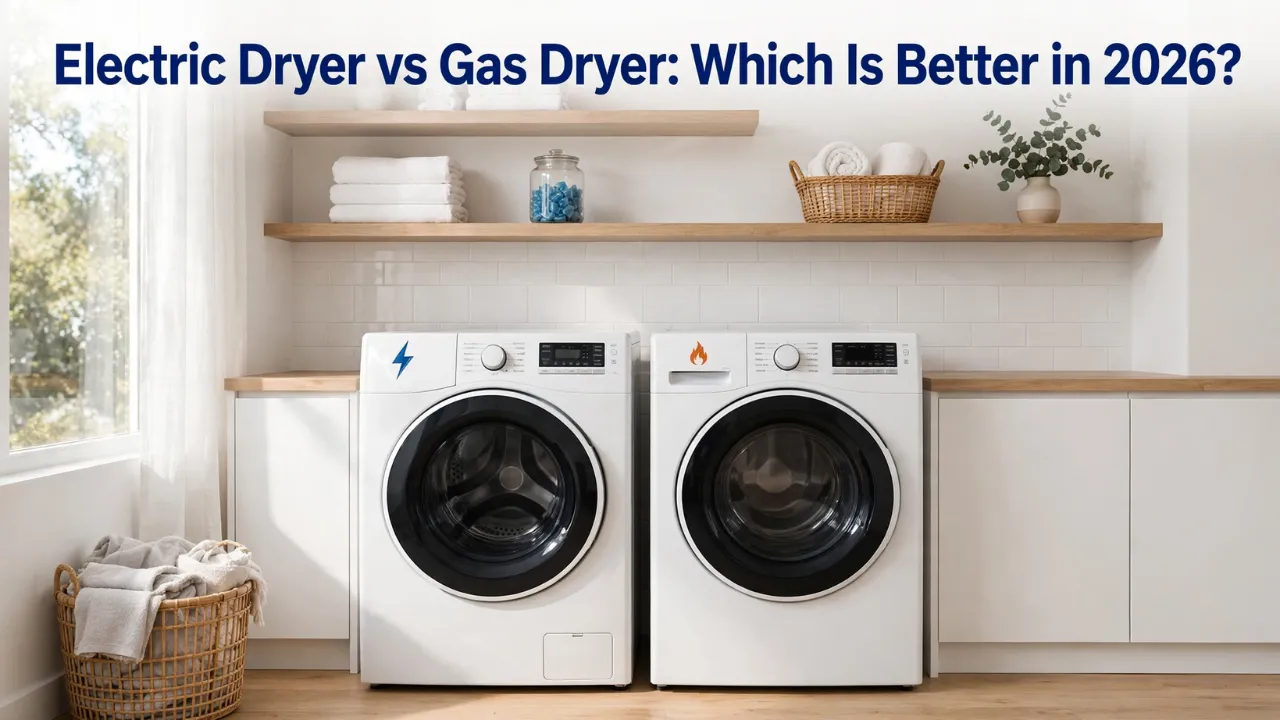
Confused to pick an electric dryer vs gas dryer with fast and reliable clothes drying. Which dryer is best is determined by your home, utility connections, installation costs, energy rates, drying needs and long-term budget.
An electric dryer creates heat through electricity. Gas dryers rely on natural gas or propane for heat, but still need electricity to power the controls, drum motor and other parts.
Either type can successfully dry clothes. However, the differences in purchase price, installation cost, operational cost and maintenance and energy use are key.

This electric dryer vs gas dryer guide will compare both types of dryers so you can make the right choice for your home.
Electric Dryer vs Gas Dryer: Quick Comparison
| Feature | Electric Dryer | Gas Dryer |
|---|---|---|
| Heat source | Electricity | Natural gas or propane |
| Installation | Usually simpler | More complex |
| Purchase price | Often lower | Often higher |
| Installation cost | Usually lower | Usually higher |
| Operating cost | Can be higher | Often lower |
| Drying performance | Very good | Very good |
| Gas connection | Not required | Required |
| Venting | Usually required | Usually required |
| Maintenance | Generally simple | Requires additional gas-related care |
| Best for | Most homes | Homes with gas service |
The biggest difference between an electric dryer vs gas dryer is the way heat is produced.
An electric dryer uses electrical heating elements. A gas dryer uses a gas burner to create heat.
What Is an Electric Dryer?
An electric dryer is a clothes dryer powered primarily by electricity. It uses electrical heating elements to warm the air inside the drum.
The heated air moves through wet clothing and removes moisture. Moist air is then exhausted through the dryer vent in traditional vented models.
Electric dryers are popular because installation is usually straightforward when the home already has the required electrical outlet.
Most full-size electric dryers require a dedicated 240-volt circuit.
One major advantage of an electric dryer is flexibility. You do not need a natural gas connection.
This makes an electric dryer a practical choice for apartments, homes without gas service, and households that want simpler installation.

What Is a Gas Dryer?
A gas dryer uses natural gas or propane to generate heat. Electricity powers the motor, controls, drum, and other electrical components.
Gas dryers generally require both a gas connection and an electrical connection.
Because of this, installation can be more complicated than installing an electric dryer.
A gas dryer may cost more initially, but some households can save money over time if natural gas is less expensive than electricity in their area.
Gas dryers are particularly attractive for households that already have a suitable gas line in the laundry room.

Electric Dryer vs Gas Dryer: Drying Performance
When comparing an electric dryer vs gas dryer, drying performance is one of the most important factors.
Both dryer types can provide excellent results.
Gas dryers are often known for heating up quickly. This can help reduce drying times for certain loads.
Electric dryers can also dry clothes efficiently and consistently. Modern electric dryers often include moisture sensors that automatically stop the cycle when clothing reaches the desired dryness.
For everyday laundry, both options can perform very well.
The difference in drying time may be less important than the dryer model, load size, cycle selection, ventilation, and moisture-sensing technology.

Electric Dryer vs Gas Dryer: Energy Efficiency
Energy efficiency is another important consideration.
A gas dryer uses natural gas or propane to produce heat. An electric dryer uses electricity for its heating element.
However, you should not assume that every gas dryer will automatically be cheaper or more efficient.
Local utility rates matter.
If electricity is expensive in your area and natural gas is relatively inexpensive, a gas dryer may have lower operating costs.
If your electricity costs are reasonable and you do not have a gas connection, an electric dryer may be more practical.
Modern heat-pump dryers are another option. They use a different drying technology and can use significantly less electricity than conventional electric dryers.

Electric Dryer vs Gas Dryer: Purchase Price
The initial purchase price can vary significantly between individual models.
In many cases, electric dryers are available at lower upfront prices.
Gas dryers may cost more because they require gas-related components and specialized installation.
However, the cheapest dryer is not always the cheapest dryer to own.
When comparing an electric dryer vs gas dryer, consider the total cost of ownership.
Your calculation should include:
- Purchase price
- Installation
- Utility costs
- Maintenance
- Expected lifespan
- Repair costs
- Vent cleaning
- Required electrical or gas upgrades
A slightly more expensive dryer may provide better value if it costs less to operate over many years.
Electric Dryer vs Gas Dryer: Installation
Installation is one of the biggest differences between an electric dryer vs gas dryer.
An electric dryer typically requires a suitable 240-volt electrical connection and a properly installed vent system for a conventional vented model.
A gas dryer requires a gas supply line, appropriate electrical connection, and venting.
Gas installation should be handled by a qualified professional.
If your home already has a gas connection in the laundry room, installing a gas dryer can be relatively convenient.
If there is no gas line, adding one can increase the installation cost.
For many homeowners, an electric dryer is the easier option simply because no gas connection is necessary.
Electric Dryer vs Gas Dryer: Operating Costs
Operating cost is where the electric dryer vs gas dryer debate becomes more interesting.
Gas dryers can have lower energy costs in areas where natural gas is inexpensive.
Electric dryers may cost more to operate depending on local electricity prices.
However, energy rates vary widely by location.
For this reason, you should check your local utility prices before deciding.
If you already have gas service available, a gas dryer may make financial sense.
If your home does not have gas service, the cost of installing a gas line could eliminate the potential operating savings.
Also read:Samsung vs Whirlpool Washing Machine: 2026 Buying Guide
Electric Dryer vs Gas Dryer: Maintenance
Both dryer types require regular maintenance.
The lint filter should be cleaned after every load.
The dryer vent should also be inspected and cleaned periodically.
A blocked vent can reduce drying performance and increase energy use. It can also create a serious safety concern.
Gas dryers have additional gas-related components that may require professional inspection or service.
Electric dryers generally have simpler heating systems.
Neither type should be considered maintenance-free.
Regular cleaning helps maintain drying performance and can extend the useful life of your appliance.
Electric Dryer vs Gas Dryer: Safety
Safety is important when choosing an electric dryer vs gas dryer.
Every dryer should be installed according to the manufacturer’s instructions and local building codes.
For electric dryers, the electrical circuit must be correctly sized and installed.
For gas dryers, the gas connection must be installed correctly to prevent leaks.
Proper ventilation is also essential for conventional vented dryers.
Never ignore unusual smells, overheating, strange noises, or other signs of a problem.
If you suspect a gas leak, leave the area and contact the appropriate emergency or utility service.
Advantages of Electric Dryers
Electric dryers have several benefits.
Easier Installation
Electric dryers do not require a gas line.
This can make installation easier and less expensive in many homes.
Lower Initial Cost
Many electric models have competitive purchase prices.
This makes them attractive for budget-conscious shoppers.
Widely Available
Electric dryers are widely available in different capacities, sizes, and price ranges.
You can find compact dryers, full-size dryers, stackable models, and smart electric dryers.
Good Performance
Modern electric dryers can provide excellent drying performance.
Features such as moisture sensors, temperature controls, steam cycles, and multiple drying programs can improve convenience.
Good Choice for Homes Without Gas
If your laundry room does not have gas service, an electric dryer is often the simplest solution.
Disadvantages of Electric Dryers
Electric dryers also have disadvantages.
Potentially Higher Operating Costs
Electricity can be more expensive than natural gas in some locations.
This can increase long-term operating costs.
High Electrical Requirement
Many traditional electric dryers require a 240-volt circuit.
Homes without the appropriate circuit may need electrical work.
Heating Elements Can Wear Out
Electric dryers use heating components that can eventually fail and require replacement.
Advantages of Gas Dryers
Gas dryers also offer several benefits.
Fast Heating
Gas burners can produce heat quickly.
This can help certain gas dryers reach operating temperatures rapidly.
Potentially Lower Operating Cost
Natural gas can be less expensive than electricity in some areas.
This may reduce the cost of running the dryer.
Good for Large Households
Families that run multiple loads every week may appreciate the potential operating savings of a gas dryer.
Excellent Drying Performance
Gas dryers can provide strong drying performance for everyday laundry, towels, bedding, and larger loads.
Also read :CampandCooking
Disadvantages of Gas Dryers
There are also drawbacks.
Higher Installation Complexity
Gas dryers need a suitable gas connection.
Professional installation may be required.
Higher Upfront Cost
Gas models can have higher purchase and installation costs.
Not Suitable for Every Home
If your home does not have natural gas or propane service, a gas dryer may not be practical.
Additional Gas Components
Gas dryers contain additional components that can require professional service.
Which Is Cheaper: Electric Dryer vs Gas Dryer?
The answer depends on your local energy prices and installation requirements.
An electric dryer can be cheaper to purchase and install.
A gas dryer may have lower running costs.
For example, if you already have a gas line in your laundry room, choosing a gas dryer could make sense.
But if you need to install a new gas line, the additional installation expense could make an electric dryer the better financial choice.
The best approach is to calculate both the upfront and estimated yearly operating costs.
Which Dryer Is Better for Apartments?
For many apartments, an electric dryer is the more practical choice.
Apartments may not have gas connections available in the laundry area.
Electric models are also widely available in compact sizes.
If space is limited, look for a compact electric dryer or stackable washer and dryer combination.
Ventless electric dryers can also be useful in certain apartments because they do not require a traditional exterior exhaust vent.
Always check your building’s electrical and appliance requirements before purchasing.
Which Dryer Is Better for Large Families?
Large families often run several loads every week.
A full-size dryer with a large drum is usually more important than simply choosing gas or electric.
A gas dryer may be attractive if your home already has a gas connection and local gas rates are favorable.
However, a high-capacity electric dryer can also be an excellent choice.
Look for moisture sensors, large capacity, multiple drying cycles, and energy-saving features.
Electric Dryer vs Gas Dryer: Which One Should You Buy?
Choose an electric dryer if:
- Your home does not have a gas connection.
- You want simpler installation.
- You have a suitable 240-volt outlet.
- You want a wide selection of models.
- You prefer a lower initial purchase price.
- You live in an apartment or rental property.
Choose a gas dryer if:
- Your laundry room already has a gas connection.
- Natural gas is affordable in your area.
- You want fast heating.
- You regularly dry large loads.
- You are comfortable with professional gas installation.
There is no universal winner in the electric dryer vs gas dryer comparison.
The best choice depends on your home and local utility costs.
Important Features to Look For
Regardless of whether you choose gas or electric, look for useful modern features.
Moisture Sensor
A moisture sensor detects when clothes are dry and can automatically stop the cycle.
This can help prevent unnecessary drying.
Large Capacity
A larger drum is useful for families and bulky items.
It can also reduce the number of drying cycles you need.
Multiple Drying Cycles
Look for cycles for towels, bedding, delicate clothing, heavy items, and quick drying.
Wrinkle Reduction
Wrinkle-reduction features can help keep clothes looking better when you cannot remove them immediately.
Steam Function
Some premium dryers include steam cycles designed to reduce wrinkles and refresh clothing.
Smart Features
Wi-Fi connectivity and smartphone notifications can be useful for households that want greater control over laundry.
How to Save Money With Your Dryer
Whether you choose an electric dryer vs gas dryer, proper use can reduce energy consumption.
Do not overload the dryer.
Overloading can restrict airflow and increase drying time.
Clean the lint filter after every load.
Check the exhaust vent regularly.
Use moisture-sensing cycles when available.
Dry similar fabrics together.
Avoid repeatedly running partially filled loads.
Also consider air-drying lightweight clothing when practical.
These simple habits can improve dryer performance and reduce unnecessary energy use.
Electric Dryer vs Gas Dryer: Final Verdict
The choice between an electric dryer vs gas dryer ultimately comes down to your home, budget, utility costs, and installation requirements.
An electric dryer is usually the easiest choice for homes without gas service. It offers excellent performance, broad availability, and relatively straightforward installation.
A gas dryer can be a strong choice for homes that already have a gas connection. It may offer lower operating costs when natural gas prices are favorable.
Before buying, compare the purchase price, installation cost, energy rates, capacity, features, and expected maintenance.
For most shoppers, the best dryer is not simply the one with the lowest price. It is the dryer that provides reliable performance at a reasonable total cost over its lifetime.
Final Buying Advice
When comparing an electric dryer vs gas dryer, start with your home’s existing connections.
If you already have gas service, compare the cost of a gas model with an electric model.
If you do not have gas service, an electric dryer will usually be much simpler.
Most importantly, focus on total ownership cost rather than the purchase price alone.
Choose the dryer that fits your laundry space, household size, energy prices, and drying habits.
Frequently Asked Questions
Is an electric dryer better than a gas dryer?
Neither is universally better. Electric dryers are usually easier to install, while gas dryers can have lower operating costs in areas with inexpensive natural gas.
Is it cheaper to run a gas dryer or electric dryer?
A gas dryer can be cheaper to operate where natural gas costs less than electricity. However, local utility prices and installation costs determine the actual savings.
Do electric dryers dry better than gas dryers?
Both can provide excellent drying performance. Drying speed depends on the dryer model, load size, airflow, moisture sensors, and cycle settings.
Are gas dryers worth the extra cost?
A gas dryer can be worth the extra cost if you already have a gas connection and natural gas is relatively inexpensive in your area.
Which dryer is better for a small home?
An electric dryer is often a practical option for small homes because it does not require a gas connection. Compact and ventless electric models can be particularly useful where space is limited.
Do gas dryers use electricity?
Yes. Gas dryers still use electricity for components such as the motor, controls, drum, and ignition system.
Do electric dryers need gas?
No. Electric dryers do not require a natural gas connection.
How long do dryers usually last?
Dryer lifespan varies by model, usage, maintenance, and installation. Regular cleaning and proper use can help extend the life of either an electric or gas dryer.



1 Comment
[…] Also read:Electric Dryer vs Gas Dryer: Which Is Better in 2026? […]